Harm Reduction Issues
Syringe
Services
There are many reasons a person might inject drugs. It is possible to completely avoid or reduce injection-related health risks if someone has a sterile syringe and proper equipment for every injection.
Syringe service programs (SSPs) distribute sterile syringes, safer drug use supplies, and education to people who inject drugs. These harm reduction programs are proven to reduce HIV and HCV infection rates by about 50%.
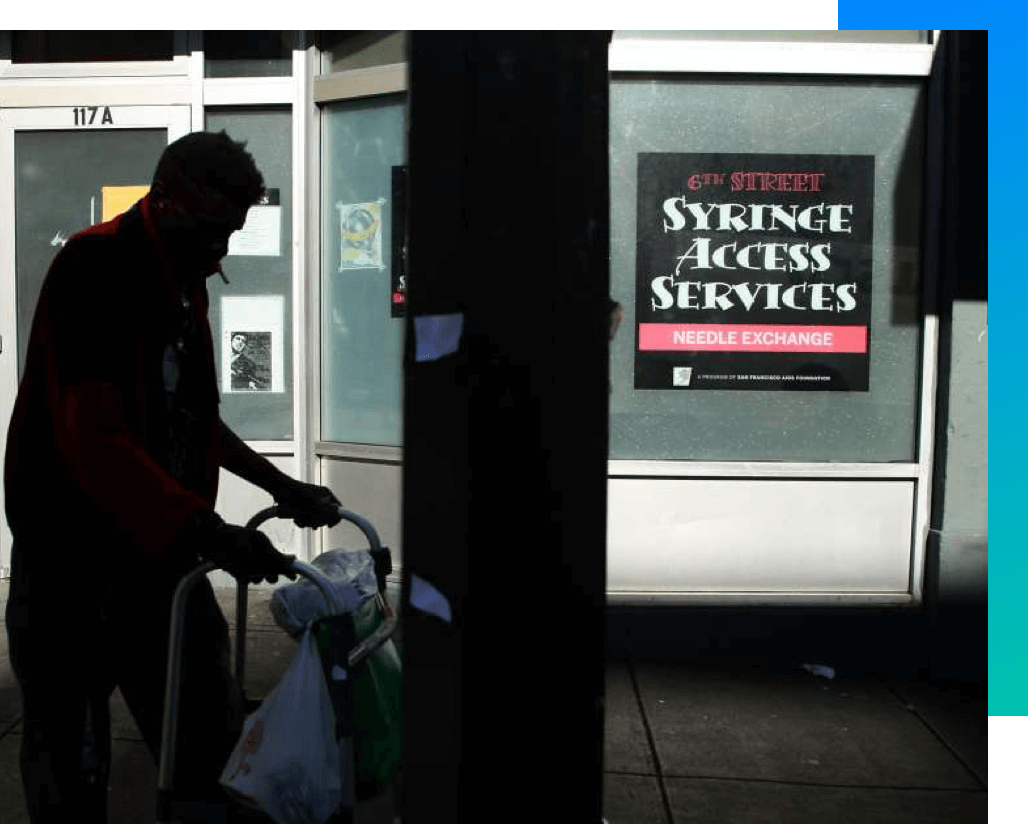
Why Syringe Service Programs
What does syringe access look like in your community? Learn more about the benefits of SSPs and where they are across the country.
Syringe service programs work – but you don’t have to take our word for it. We rely on the Centers for Disease Control for the most up to date information about the efficacy of SSPs.
Need sterile syringes? The North American Syringe Exchange Network (NASEN) has a nationwide directory of SSPs.
Clinical health services at SSPs
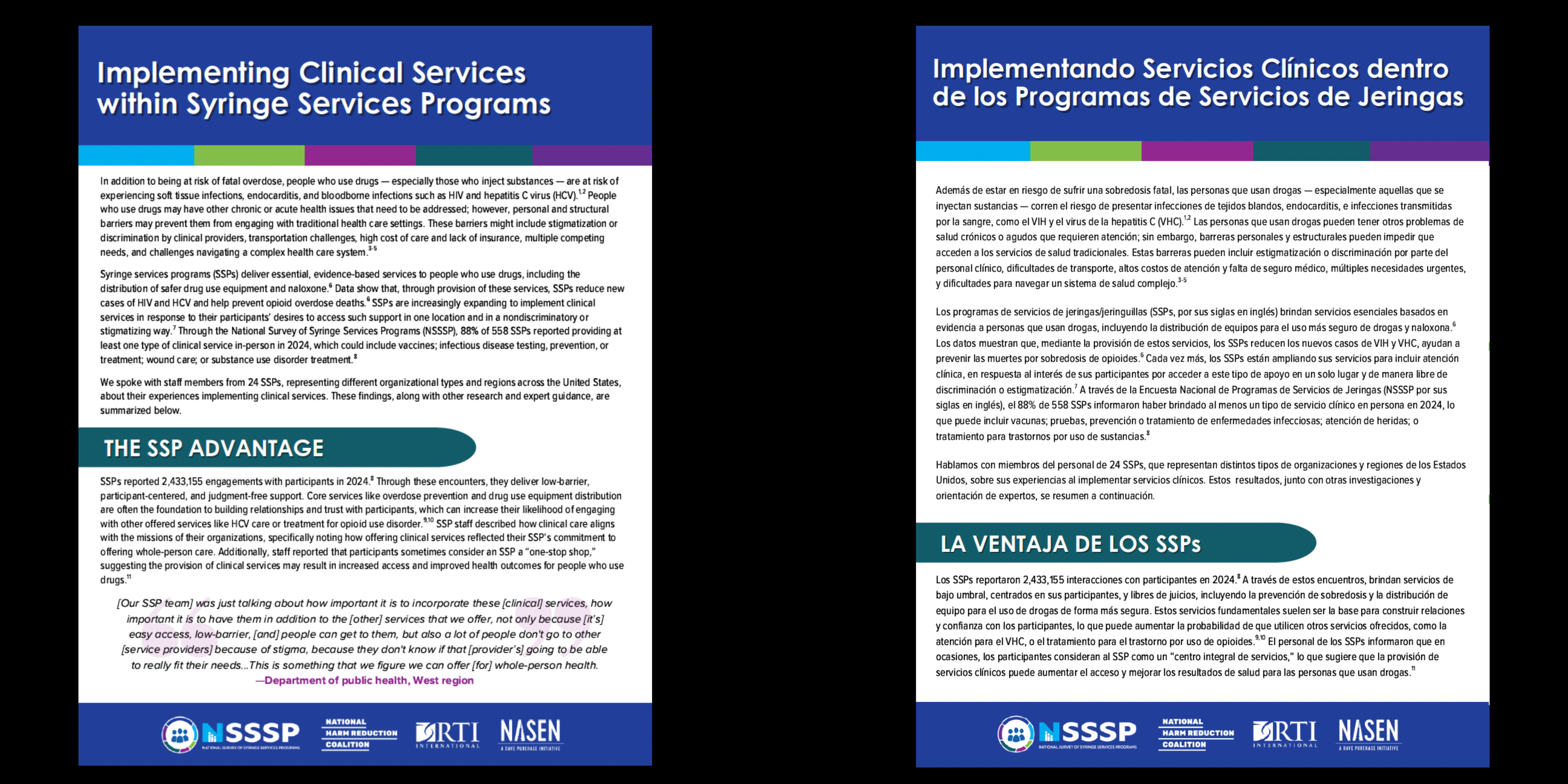
Syringe Services Programs (SSPs) provide whole-person care to participants by offering clinical health services like infectious disease testing and treatment, substance use treatment, and primary care alongside overdose prevention services and the distribution of drug use equipment. NHRC, in collaboration with our partners at RTI International and the North American Syringe Exchange Network (NASEN), have published fact sheets in Spanish and English that focus on the experiences 24 SSPs have had implementing clinical services into their work. The fact sheets include information about models SSPs can use to offer these services, challenges and opportunities they face in the process, and more.
Learn more about the findings:
Get sterile syringes to people who need them
There are over 400 SSPs in the U.S., but many areas still don’t have access. Starting a syringe service program is one way to support the health of people in your community who use drugs.
Find more guidance on how to start a harm reduction program.
Advocating for syringe access?
Access to sterile syringes has increased significantly in recent years, but the journey isn’t over. See how far we’ve come and how far we have left to go.